Start at the End
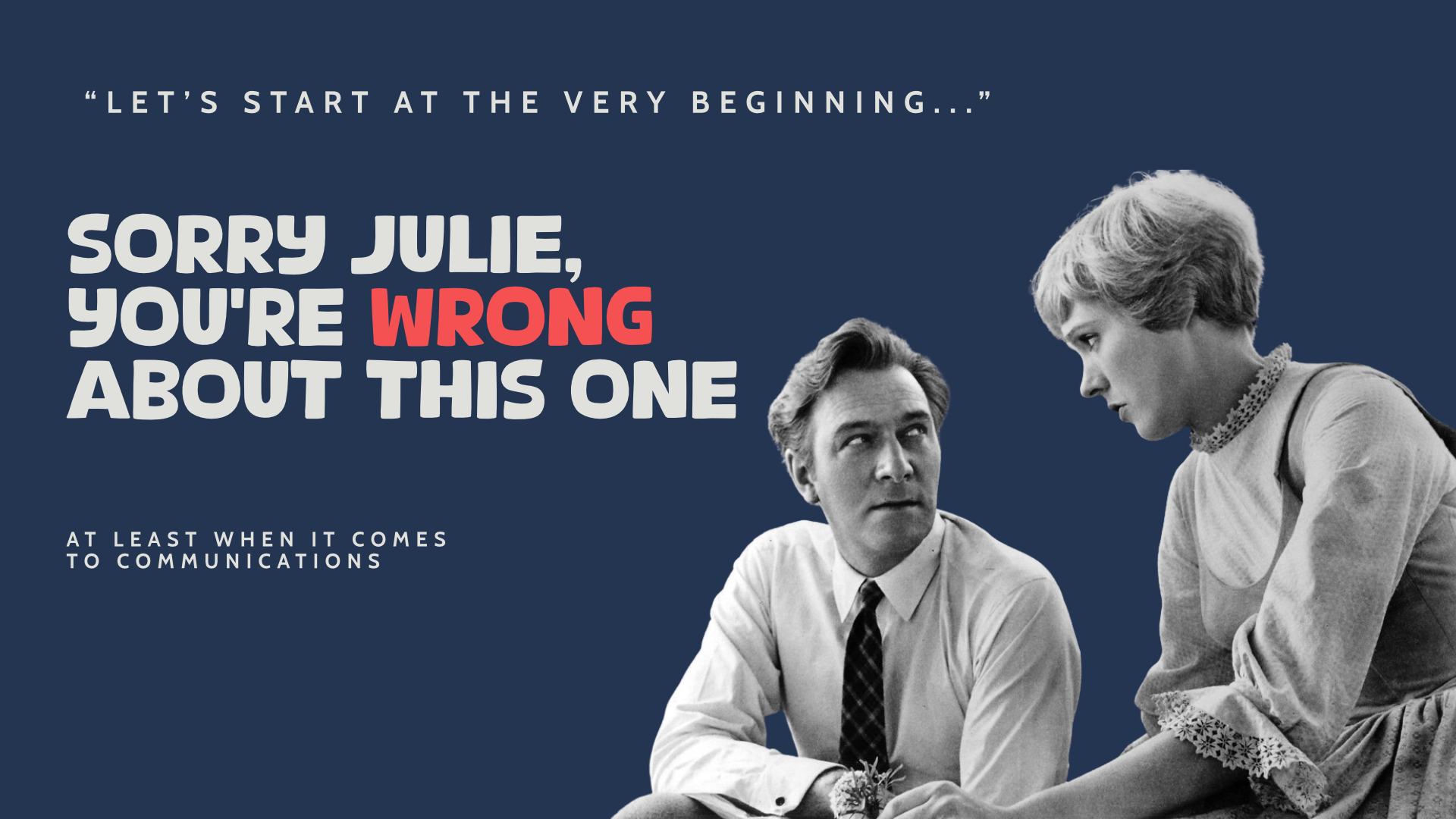
Julie Andrews famously told us to begin at the beginning. It's lovely advice for learning to sing. But when it comes to planning a social media post, a newsletter or a campaign, I'd gently suggest the opposite.
Most of us plan our social media posts the way we'd tell a story. We start with what we want to say: the event, the news, the update. We write it, find a photo, press publish…and then wonder why it didn't land. The problem usually isn't the content. It's the starting point. When you begin with your message, you're thinking about yourself. When you begin with the end, the moment someone actually sees your post, you're thinking about them.
So before you write a single word, ask two questions.
1. How do you want people to feel?
Decide on the emotion first.
Welcomed?
Inspired?
Curious?
Reassured?
Excited?
Moved to help?
That one decision quietly shapes everything else: the photo you choose, the tone of your words, even the colours you use. A post designed to make people feel welcome looks and sounds very different from one designed to create urgency. For example: a church is promoting its Christmas services. "Carol Service, Sunday 6pm" is information. A warm photo of candlelit faces with the words "Everyone's welcome. Come as you are" is an invitation. Same event, completely different feeling.
2. What do you want them to do? (Your call to action)
This is your Call to Action: the response you're hoping for once someone has seen your post.
Book a place.
Visit the website.
Share it with a friend.
Save it for later.
Come along on Sunday.
Donate.
Reply.
Every piece of communication should have one, even if it's small. If you can't name it, the post probably isn't ready yet. Keep it specific and keep it simple. One clear action beats five vague ones. "Book your free place using the link in our bio" will always outperform "Find out more".
Start with the response you want. Then work backwards.
3. Then work backwards
Once you know the feeling and the action, every other choice becomes a filter.
Does this photo create the feeling I'm after?
Does this headline lead people towards the action?
Does this paragraph genuinely help, or is it only here because we'd normally include it?
Working backwards keeps the viewer in mind at every step. And that, after all, is the whole point of communicating. It isn't about what we say; it's about what people hear, feel and do.
A quick checklist for your next post
1. The feeling.
What should people feel in the first two seconds?
2. The action.
What one thing do you want them to do next?
3. The image.
Does it create that feeling on its own?
4. The words.
Does every line lead towards the action?
5. The stranger test.
Would someone who has never heard of you know exactly what to do after seeing it?
It works beyond social media
This isn't just an Instagram trick. The same approach works for newsletters, website pages, weekly notices, fundraising appeals, event posters and product launches. Whether you're a church, a charity or a small business, start with the response you want and work back from there. So, sorry Julie. The beginning is a wonderful place to start a song. For everything else, start at the end.
Want help planning yours?
I help churches, charities and businesses communicate with clarity and creativity, from strategy reviews to one-off campaigns.